qEEG Brain Mapping London
What is qEEG?
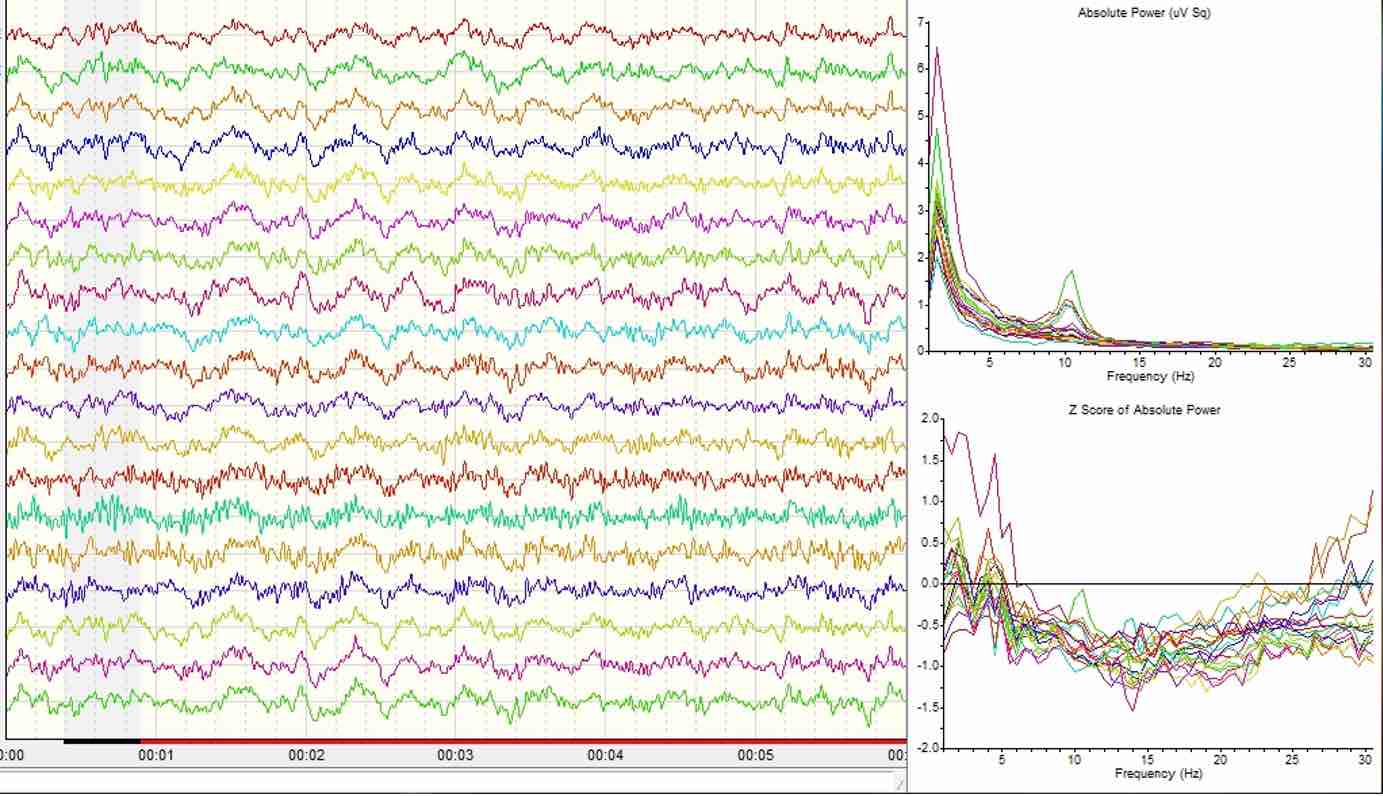
Quantitative electroencephalography (qEEG) is a non-invasive assessment technique that records brain activity. It helps create a detailed map of the brain’s functioning. Which can assist treatment plans for various mental health and neurological conditions.
It can detect abnormal patterns of brain activity linked with mental and neurological disorders. It can also be used to monitor treatment progress and identify changes in brain function over time. Additionally, qEEG can be used to identify biomarkers to of brain health. Helping to predict the risk of neurological and psychiatric disorders.
Overall, it is a valuable tool for improving the accuracy of treatment planning. Along with enhancing our understanding of brain function and health.
Want Personalised Mental Health Care? Start with a qEEG Brain Map.
Take control of your mental and neurological health with an independent qEEG report. This cutting-edge assessment reveals a detailed map of your brain’s activity, identifying areas of imbalance that may be affecting your well-being.
With these insights, you’ll gain a clear path to tailored treatments designed to optimise your recovery and help you achieve lasting results. Start your journey to better brain health today!
Why You Should Consider a qEEG Brain Mapping Report:
1. Identify the Root Causes of Symptoms
A qEEG reveals how different brain regions are functioning. This helps to uncover the neurological basis of issues like anxiety, depression, brain fog, ADHD, and insomnia.
2. Get a Personalised Treatment Plan
Whether you’re starting TMS, neurofeedback, or cognitive therapy, qEEG allows your care to be tailored to your unique brain profile. Not just your symptoms.
3. See What Medication or Talk Therapy Might Miss
Unlike questionnaires or surface-level assessments, qEEG provides an objective view. With a data driven picture of your brain’s electrical activity.
4. Track Progress Over Time
qEEG brain mapping can help track changes in your brain over time. By comparing scans before and after treatment, we can see whether your brain activity has changed and whether your treatment plan is having the right effect.
5. Support Cognitive and Emotional Performance
You do not need a diagnosis to benefit from qEEG. Brain mapping can highlight patterns that may affect focus, memory, mood, stress levels, or emotional resilience. This can help us better understand what may be influencing how you think, feel, and respond day to day.
6. Feel More Informed and Empowered
Many clients feel relieved when they can finally see what may be happening in their brain. A qEEG report gives clear, practical insight into your brain activity. This can help guide treatment, lifestyle changes, and smarter decisions about your wellbeing.
“Having an independent qEEG report means you’re getting a detailed neuroscientific perspective on how your brain is functioning. It’s simply information—there’s no obligation to start any treatment afterward. The results are there to help you understand your brain better, and you can choose whether to take any next steps or just keep the insights for yourself.”
How Brain Mapping Enhances the Accuracy and Effectiveness of TMS Treatment.
Benefits of Guided TMS?
Guided TMS utilises the qEEG brain mapping method to target specific parts of the brain, allowing for a precise and tailored treatment plan and outcome.
- Personalised Treatment Plans: qEEG identifies specific brain regions with abnormal activity, allowing TMS to target those areas effectively.
- Enhanced Treatment Precision: Provides a detailed brain map to pinpoint areas for TMS stimulation, improving treatment accuracy.
- Better Understanding of Symptoms: Helps identify the neurological basis of conditions, such as depression or anxiety, offering deeper insights into the root causes.
Guided TMS vs Standard TMS
What makes guided TMS different from standard TMS therapy is that it allows us to tailor your treatment plan, and measure the neurological outcomes of TMS in real-time. As a result, this makes guided TMS treatment more precise than standard TMS.
The information we gain through qEEG studies allows us to deliver TMS therapy that is customised and guided by your unique brain waves.
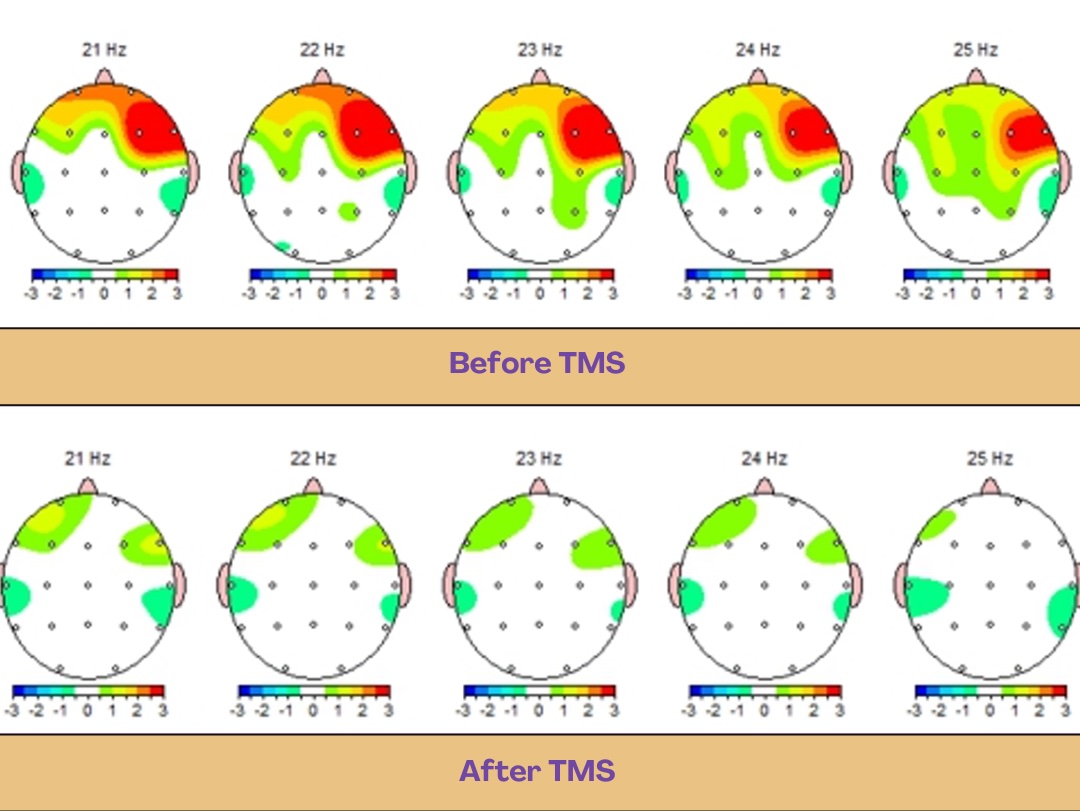
qEEG Guided TMS Treatment (Before & After)
A Quantitative Electroencephalogram map is a visual representation of the electrical activity in different brain areas, obtained through EEG recording and analysis. The map is typically presented as a colour-coded display of brainwave activity.
Condition Displayed: Depression & Anxiety
Key:
- Red: Overactivity (3)
- White: Normal (0)
- Blue: Underactivity (-3)
Independent qEEG Report
£594
1. qEEG Recording (In-person)
– Non-invasive brainwave recording using advanced EEG technology.
– Identifies activity patterns linked to symptoms or cognitive function.
2. Data Analysis & Report Creation (In-house)
– Expert analysis of recorded data & detailed report outlining key findings and clinical relevance.
3. Report Discussion & Recommendations
– Virtual consultation to review results.
– Personalised guidance on interventions and next steps.